
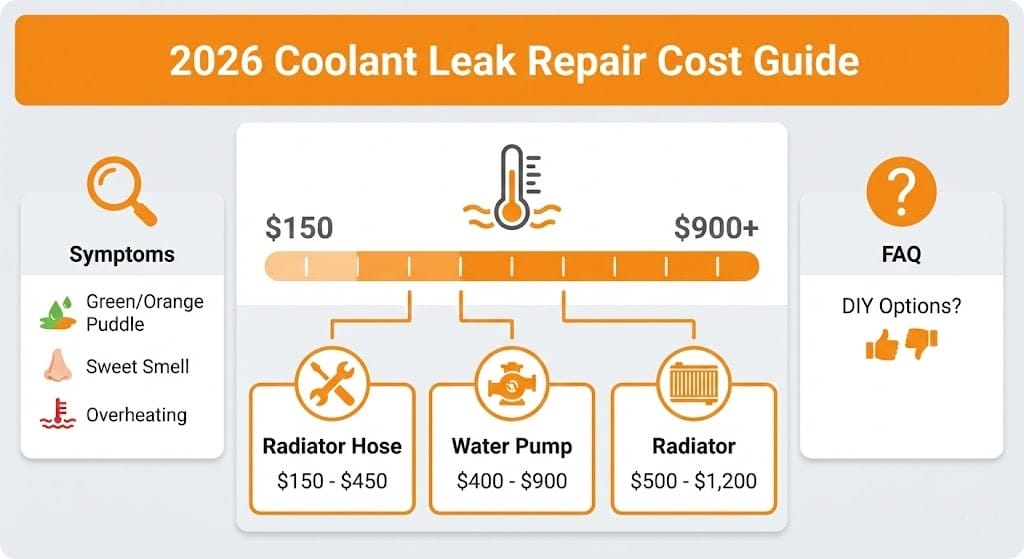
Average Repair Costs
For most drivers, fixing a coolant leak will cost between $150 and $900. If the leak is simple, like a cracked hose or a loose clamp, it is a cheap fix. If the leak is coming from a major part like the water pump or radiator, the price rises significantly due to labor.
Here is the estimated price breakdown for 2025:
| Part Causing the Leak | Estimated Cost (Parts + Labor) | Repair Time |
| Radiator Hose | $150 to $450 | 1 to 2 Hours |
| Coolant Reservoir Tank | $150 to $400 | 1 Hour |
| Water Pump | $400 to $900 | 3 to 5 Hours |
| Radiator Replacement | $500 to $1,200 | 2 to 4 Hours |
| Heater Core | $800 to $1,800 | 6+ Hours |
| Head Gasket | $1,500 to $3,500+ | 3+ Days |
How to Spot a Coolant Leak (Symptoms)
Before you pay for a mechanic, you can often confirm the issue yourself by looking for clear warning signs. Coolant, also called antifreeze, is designed to be highly visible and have a distinct smell so that leaks are easy to notice before the car breaks down completely.
- Puddles Under the Car: Look for bright, watery fluid on the ground near the front of the car. Coolant colors vary by car brand. Common colors are green, pink, orange, or blue. It will feel greasy to the touch, unlike water from your AC.
- Sweet Smell: Burning coolant has a very distinct, sweet smell that resembles maple syrup or hot candy. You might smell this outside the car or through your air vents while driving.
- Overheating Gauge: If your temperature needle creeps into the “Red” zone or the “High” mark, your engine is running too hot, likely due to low fluid levels.
- Low Reservoir Levels: Pop the hood when the car is cool and check the plastic see through tank. If the liquid is below the “Min” line, it is leaking out somewhere.
- White Smoke: Thick white smoke coming from your tailpipe is a dangerous sign. It usually means coolant is burning inside the engine block, often indicating a blown head gasket.
Detailed Cost Breakdown by Part
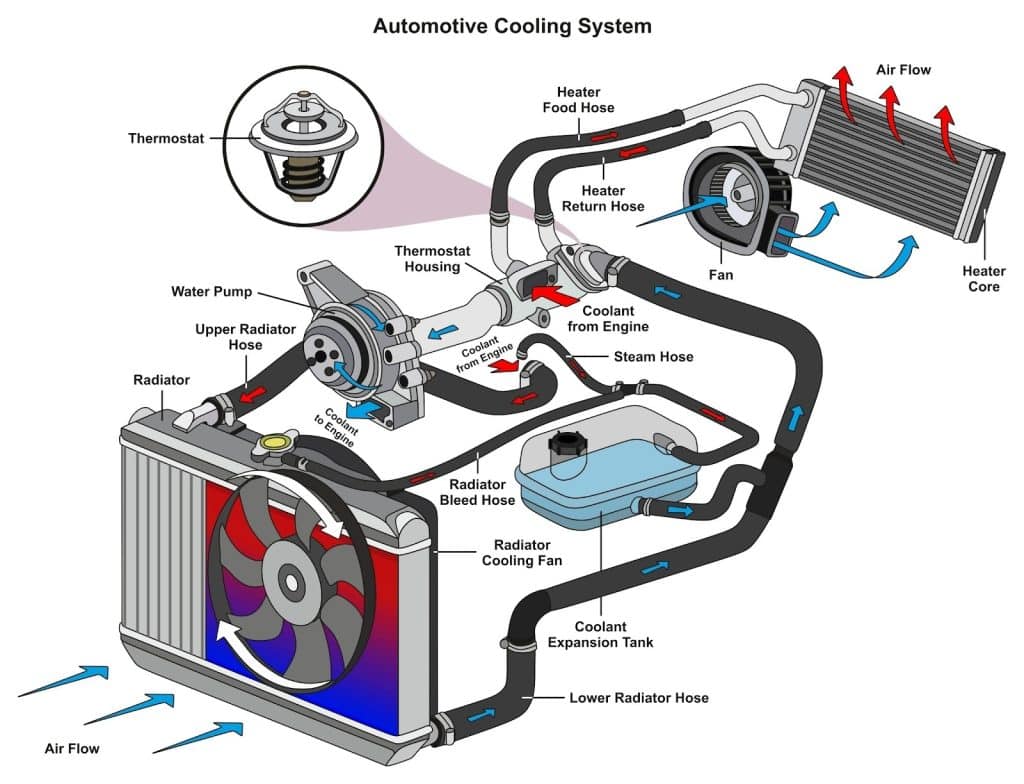
A “coolant leak” is a general term. To understand your bill, it helps to know which specific part of the cooling system failed, as some are easy to reach while others are buried deep in the engine.
1. Radiator Hoses ($150 to $450)
Your engine has thick rubber hoses that cycle fluid back and forth between the engine and the radiator. Rubber dries out and cracks over time due to the extreme heat, creating leaks. This is the most common cause of leaks. The cost is mostly for the mechanic’s time to drain the system, swap the hose, and refill it with fresh fluid, as the hose itself is usually inexpensive.
2. Radiator ($500 to $1,200)
The radiator is the large metal grille at the very front of the engine bay that cools the hot fluid. It is prone to cracks from road debris like rocks or internal rust. Replacing a radiator is more expensive because the part costs more, and mechanics often have to remove fans, bumpers, or other brackets to get the old one out.
3. Water Pump ($400 to $900)
This pump is the heart of the cooling system that pushes the liquid through the engine. If it breaks, the fluid sits still and the engine overheats almost immediately. The water pump is often buried deep inside the engine, sometimes behind the timing belt. While the part is affordable, it can take 3 to 5 hours of labor to reach it, driving up the cost.
4. Heater Core ($800 to $1,800)
If your passenger floor mat is wet or you smell the sweet syrup scent inside the cabin, your heater core is likely leaking. This is a small radiator that provides heat to your car’s interior. This is one of the most labor intensive repairs because the mechanic usually has to disassemble the entire dashboard to access the heater core, which takes a full day of work.
Is It Safe to Drive With a Coolant Leak?
Generally, no. Driving with a coolant leak is risky because coolant is the only thing stopping your engine from melting itself. If the fluid runs low, your engine temperature will spike rapidly. Overheating can warp your cylinder heads or crack the engine block, turning a relatively cheap repair into a $5,000 engine replacement.
However, there is an exception for emergencies. If the leak is very slow (just a few drops) and you must drive a short distance to a shop (less than 5 miles), you can top off the reservoir with water or coolant and drive carefully. Keep your eye glued to the temperature gauge; if it rises, pull over immediately and call a tow truck.
Can I Fix It Myself? (DIY Options)
If you are comfortable working on cars, some leaks are easy to handle, while others strictly require a professional. It is important to know your limits to avoid causing more damage.
- Try “Stop Leak” Fluids (Temporary Fix): For tiny pinhole leaks in a radiator, you can buy a bottle of “Radiator Stop Leak” for under $20 at an auto parts store. You pour it into the radiator, and it hardens to plug the hole. Note that this is a temporary band aid and can eventually clog your heater core, so use it only in emergencies.
- Replacing a Hose (Easy DIY): If you can clearly see a crack in a top radiator hose, you can replace this yourself with a screwdriver and a bucket. It is a great beginner repair.
- Complex Parts (Pro Only): You should leave water pumps, heater cores, and head gaskets to professionals. These require specialized tools and precise timing adjustments that can ruin an engine if done wrong.
Conclusion
Finding a coolant leak early is the best way to save money and keep your car running longer. A small hose repair today costs around $200, but ignoring it until the engine overheats can cost thousands in engine repairs.Whether you are stuck in your driveway or at your workplace, the principles of integrity and timely repair remain the same. Dallas Metro Mobile Mechanic understands that vehicle leaks cause stress and require immediate, honest professional attention. With years of experience built on values of transparency and quality service, we know that choosing a repair professional who treats your car with respect is the most important decision you can make. Always look for a mechanic who mirrors these high standards of honesty and care.


