
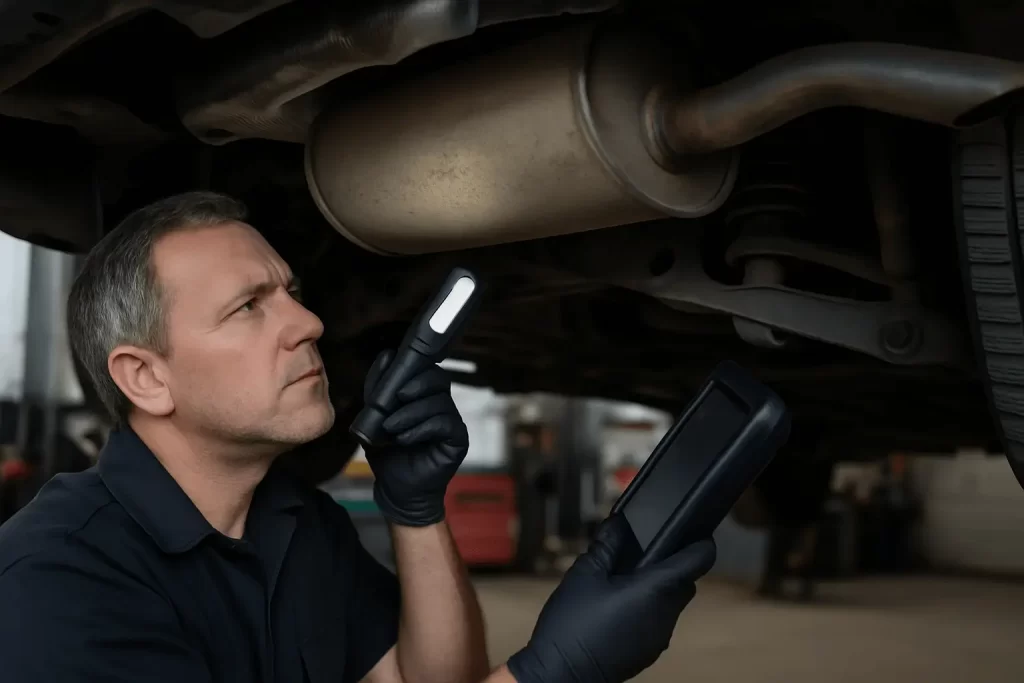
If you’re driving around Dallas and notice your car sounding louder than usual or burning through gas faster than it should, your exhaust system might be the reason. Most people don’t think about their exhaust system until something goes wrong but it plays a big role in how your vehicle performs, how much fuel it uses, and even how safe it is to drive.
In a city like Dallas, where traffic is heavy and weather swings from hot and humid to icy overnight, your car’s exhaust system takes a beating. Cracks, rust, leaks, and broken parts are more common than you might think and they often go unnoticed until they cause real problems.
This guide breaks down what Dallas drivers need to know to spot early signs of exhaust trouble, prevent expensive repairs, and keep their cars running safely and efficiently year-round. Whether you’re commuting on I-635, stuck on US-75, or just trying to pass your next inspection, knowing how to care for your exhaust system can save you time, money, and stress.
Table of Contents
Signs Your Exhaust System Has a Problem
Many Dallas drivers miss the early warning signs of exhaust problems because they’re subtle at first. But catching them early can save you money and headaches down the road. Here’s what to look for:
- Loud Rumbling or Roaring Sounds – A louder-than-usual engine often means a hole or crack in the muffler or pipe.
- Stronger Gas Smell Inside or Outside the Car – This could be a dangerous exhaust leak.
- Poor Gas Mileage – If you’re filling up more often, a failing exhaust could be why.
- Check Engine Light – Often triggered by a faulty oxygen sensor or catalytic converter.
- Rattling Underneath the Car – Loose exhaust parts or a failing catalytic converter.
- Vibration in the Steering Wheel or Pedals – This could point to an exhaust system imbalance.
If you notice any of these, don’t wait. Ignoring these signs could lead to much bigger (and more expensive) issues.
Most Common Exhaust System Issues in Dallas
Dallas roads, weather, and stop-and-go traffic can take a toll on your vehicle’s undercarriage – including the exhaust system. Here are the issues mechanics in Dallas see most often:
1. Rust and Corrosion
Humidity, rain, and road salt from winter ice events (yes, even in Texas) can corrode exhaust pipes and mufflers.
2. Damaged Catalytic Converter
This part helps reduce emissions. If it’s clogged or broken, your car may run rough, lose power, and fail emissions tests.
3. Leaky Exhaust Manifold
Cracks or bad gaskets can cause noise, reduced engine performance, and allow toxic gases to leak.
4. Worn-Out Muffler
A muffler with holes lets out excessive noise and emissions—plus it’s illegal to drive like that in many places, including Texas.
5. Broken Hangers and Mounts
These hold your exhaust system in place. If they break, parts can drag or bang around under your car.
Why These Problems Are Common in Texas
Dallas is tough on vehicles. It may not snow much, but all-year driving in high heat, occasional hail, humidity, and road debris cause wear-and-tear quickly. The constant expansion and contraction of metal parts under the hot Texas sun leads to cracks, especially around welds and joints.
City driving also means more idling and short trips, which cause moisture to build up in the exhaust. That moisture can’t always evaporate, leading to rust—especially if you park outside.
How to Check for Exhaust System Damage at Home
You don’t need to be a mechanic to spot early signs of exhaust trouble. A quick monthly check under your car could help you avoid bigger problems later.
Here’s what Dallas drivers can do at home:
- Look Underneath for Rust – Use a flashlight to check the pipes and muffler. Surface rust is normal, but deep rust, flaking, or holes mean trouble.
- Check for Black Soot – Around joints or the tailpipe, this can signal a leak.
- Listen at Startup – Louder noise than usual or rattling sounds might mean broken mounts or loose parts.
- Smell Test – If you smell strong fumes when the engine’s running, that’s a red flag.
- Watch for Dripping – Water dripping constantly from exhaust pipes (especially when it’s hot outside) could indicate an internal leak.
If you’re unsure, it’s best to let a trusted local mechanic in Dallas take a look.
When to See a Mechanic Near You
If your car is louder than usual, smells like exhaust inside, or struggles to accelerate, it’s time to visit a local repair shop. Don’t wait for the problem to get worse. In Dallas, ignoring these issues can mean failing a state inspection or risking a breakdown in 100-degree heat.

How to Prevent Exhaust System Issues
Preventing problems is always cheaper than fixing them. Dallas drivers can follow these steps to keep their exhaust system healthy:
- Wash Your Car’s Undercarriage Regularly – Especially after rain or driving on salted roads.
- Avoid Potholes and Road Debris – These can damage hangers and the exhaust pipe itself.
- Drive Long Enough to Evaporate Moisture – Especially in cooler months, let your car run for at least 15–20 minutes.
- Use Quality Fuel – Cheap gas can cause faster buildup in the catalytic converter.
- Schedule Yearly Inspections – Ask your mechanic to check the exhaust during oil changes.
These steps may seem small, but they can save you thousands in the long run.
Cost of Ignoring Exhaust Repairs in Dallas
Many drivers wait until they fail inspection or their car won’t start to deal with exhaust issues—but that delay can be costly.
Here’s what could go wrong if you wait too long:
- Catalytic Converter Replacement – Can cost $900–$2,500 or more.
- Failed State Inspection – Common in Dallas if emissions systems don’t work properly.
- Fuel Waste – Bad exhaust parts reduce fuel efficiency by 10–20%.
- Toxic Gas Exposure – Dangerous fumes can leak into the cabin if there’s a hole near the manifold.
- Engine Damage – Back pressure from a clogged exhaust system can ruin your engine over time.
Fixing a small leak might cost $100. Waiting could cost thousands.
Best Practices for Dallas Drivers Year-Round
If you live in Dallas or nearby suburbs like Irving, Mesquite, or Grand Prairie, staying ahead of exhaust system issues is part of car ownership. Here’s a checklist to follow all year long:
- Spring – Inspect for rust or damage from winter weather.
- Summer – Watch for overheating and keep an ear out for strange engine noises.
- Fall – Get a full inspection before the temperature swings begin.
- Winter – Avoid puddles, salted roads, and always warm your car up properly.
No matter the season, treating your car well helps it last longer and saves you money.
Final Thoughts and What to Do Next
When it comes to your car’s exhaust system, ignoring small issues can turn into major problems fast – especially with how much wear and tear Dallas roads can dish out. A tiny leak today could lead to engine damage or inspection failure tomorrow.
If you’re hearing strange noises, smelling exhaust fumes, or noticing your car just isn’t running like it used to, don’t put it off. Find a trusted local exhaust repair service in Dallas and get it checked out.
Keeping your exhaust system in top shape means better gas mileage, smoother performance, and safer drives across the Metroplex. Take care of it now, and you’ll avoid bigger headaches later. Your car and your wallet – will thank you.
FAQs
What are the signs of a bad exhaust system?
Common indicators include loud rumbling noises during acceleration, a ticking sound at startup, or vibrations felt in the steering wheel and gas pedal. You may also notice a significant drop in fuel efficiency or the smell of raw gasoline, which suggests a leak that requires immediate attention to prevent engine damage.
Why does my car smell like gas inside the cabin?
A strong fuel odor inside your car is a critical warning sign of an exhaust leak upstream of the catalytic converter, allowing carbon monoxide to enter the cabin. This is a serious safety hazard; Dallas Metro Mobile Mechanic can perform a specialized pressure test at your location to immediately identify the source of the leak and ensure your vehicle is safe to drive.
Does a broken exhaust affect fuel economy?
Yes, an exhaust leak near the engine can confuse your vehicle’s oxygen sensors, causing the onboard computer to inject more fuel than necessary. This rich fuel mixture not only wastes gas, lowering mileage by up to 20%, but can also foul your spark plugs and destroy the catalytic converter over time.
Why is my car making a rattling noise underneath?
Rattling sounds typically point to broken exhaust hangers or heat shields that have rusted loose, but they can also indicate that the internal honeycomb of your catalytic converter has shattered. Dallas Metro Mobile Mechanic technicians frequently encounter these issues on Dallas roads and can often re-secure loose mounts on-site before they fall off completely.
How much does catalytic converter replacement cost in Dallas?
Replacing a catalytic converter is one of the most expensive exhaust repairs, often costing between $900 and $2,500 due to the precious metals inside the part. To avoid this expense, Dallas Metro Mobile Mechanic advises regular engine diagnostics, as fixing minor issues like misfires early is the best way to prevent the converter from overheating and failing.
Is it illegal to drive with a loud exhaust in Texas?
Yes, Texas law requires all vehicles to be equipped with a muffler in good working order to prevent excessive or unusual noise. Driving with a muffler that has holes, severe rust, or has been removed can result in traffic citations and will cause your vehicle to fail the mandatory annual state safety inspection.
How does Dallas weather damage car exhaust systems?
Dallas vehicles are subject to a cycle of thermal shock from extreme heat and high humidity, which accelerates metal fatigue and corrosion. Additionally, occasional winter ice events lead to the use of road salts that stick to the undercarriage; if not washed off, this salt eats through exhaust pipes and welds rapidly.
Will a bad exhaust cause a check engine light?
Absolutely; the exhaust system contains sensors that monitor engine efficiency and emissions control. If a leak changes the pressure or oxygen levels, the system triggers the check engine light. Dallas Metro Mobile Mechanic utilizes advanced diagnostic scanners to interpret these specific codes, distinguishing between a simple sensor failure and major system damage.
How can I prevent exhaust rust and corrosion?
The best prevention is washing your car’s undercarriage regularly to remove mud and road salts that trap moisture against the metal. It is also important to drive long enough, at least 20 minutes, to allow the exhaust system to reach full operating temperature, which evaporates internal condensation that causes mufflers to rot from the inside out.
Who offers mobile exhaust system inspections in Dallas?
While many drivers take their cars to traditional muffler shops, mobile services now offer a more convenient alternative. Dallas Metro Mobile Mechanic brings professional diagnostic tools directly to your home or office, allowing you to get a comprehensive exhaust system inspection and repair plan without wasting your day at a repair shop.


