
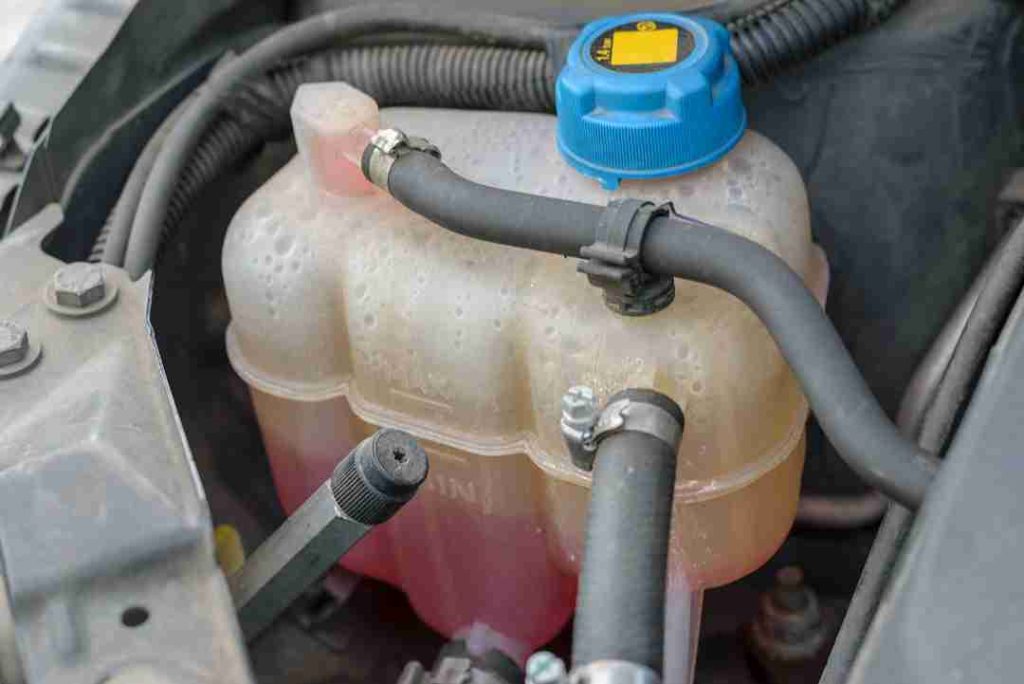
Radiator coolant reservoir empty means your car has no backup coolant stored to regulate engine temperature, and this can quickly lead to overheating and serious damage if ignored. The reservoir is designed to hold extra coolant that flows in and out of the radiator as the engine heats up and cools down. When it runs dry, it signals a leak, evaporation from overheating, or another cooling system problem.
Many drivers first notice the issue when they glance under the hood or see a dashboard warning light. Coolant is one of the most important fluids in your car. It prevents overheating, protects metal parts from corrosion, and keeps the engine running smoothly. An empty reservoir should never be overlooked.
This guide explains why your coolant reservoir might be empty, the risks of continuing to drive, and both quick and long-term fixes you can rely on.
Table of Contents
What the Radiator Coolant Reservoir Does?
The coolant reservoir is a small plastic tank located near the radiator. It stores extra coolant that flows in and out of the radiator as the engine heats up and cools down. When your car gets hot, the coolant expands and moves into the reservoir. When the engine cools, it pulls the coolant back into the radiator.
This system is designed to keep coolant levels balanced and the engine protected. If the reservoir is empty, it usually points to one of three problems:
- The engine is using more coolant than normal.
- There is a leak somewhere in the cooling system.
- The coolant has boiled away due to overheating.
Understanding these possibilities is the first step in solving the problem.

Signs Your Radiator Coolant Reservoir Is Empty
Many drivers notice the empty tank only after looking under the hood, but there are other warning signs to watch for:
- Dashboard warning light: Most vehicles have a temperature or coolant light.
- Engine running hot: The temperature gauge may creep up toward “H.”
- Heater not working: If the coolant level is too low, your heater may blow cold air.
- Visible puddles under the car: Leaks leave stains, usually green, orange, or pink depending on coolant type.
- Steam from under the hood: A clear sign the engine is overheating.
These are not just inconveniences. They are warnings that your engine is at risk.
Causes of an Empty Coolant Reservoir
1. Leaks in the Cooling System
The most common reason for finding your radiator coolant reservoir empty is a leak. Leaks can occur in:
- Radiator hoses
- Water pump
- Heater core
- Radiator itself
- Reservoir tank (cracks in plastic are common)
Even small leaks add up over time, leaving your tank dry.
2. Overheating and Boil-Off
If the engine gets too hot, coolant can boil and evaporate. This usually happens when a thermostat sticks closed, the radiator fan fails, or the radiator is clogged.
3. Faulty Radiator Cap
A worn-out radiator cap cannot hold proper pressure. Without pressure, coolant boils at a lower temperature and escapes faster.
4. Blown Head Gasket
This is a more serious cause. A damaged head gasket lets coolant leak into the engine cylinders or mix with oil. If you see white smoke from the exhaust or milky oil, this may be the problem.
5. Neglected Maintenance
Sometimes, an empty reservoir is simply due to never topping up coolant or ignoring scheduled maintenance. Coolant does evaporate slowly over time, though it should not vanish completely.
Risks of Driving with an Empty Coolant Reservoir
Engine Overheating
Without coolant, the engine cannot regulate temperature. Overheating can warp the cylinder head, crack the block, or destroy the head gasket.
Expensive Repairs
What starts as a 20 dollar bottle of coolant can turn into a 2,000 dollar engine repair if ignored.
Loss of Heater Function
Coolant not only keeps the engine cool but also powers the cabin heater. Driving without it may leave you freezing in winter.
Breakdown on the Road
An engine that overheats may stall, leaving you stranded. This is dangerous if it happens in heavy traffic or remote areas.
Simply put, driving with your radiator coolant reservoir empty is not safe.
Quick Fixes You Can Try Immediately
1. Add Coolant Safely
If the engine is cool, open the reservoir and add the correct coolant mix (usually 50/50 coolant and distilled water). Do not open the radiator cap while the engine is hot, as it can cause burns.
2. Look for Visible Leaks
Check under the car and along hoses for puddles or wet spots. If you see a leak, avoid long drives until it is repaired.
3. Inspect the Radiator Cap
Replace the radiator cap if it looks worn or fails to tighten properly. This is an inexpensive part that often solves pressure problems.
4. Use Water in Emergencies
If you are stranded, you can add clean water temporarily. This will not protect against freezing or corrosion, but it is better than running dry. Replace with proper coolant as soon as possible.
Long-Term Solutions
Professional Leak Repair
A mechanic can pressure-test your cooling system to find hidden leaks. Hoses, water pumps, or radiators can be replaced before more damage occurs.
Head Gasket Inspection
If coolant disappears without visible leaks, a head gasket test may be needed. Catching this early can save your engine.
Coolant Flush and Replacement
Old coolant loses its protective properties. Flushing the system every few years keeps it working properly.
Regular Maintenance
Checking coolant levels monthly is simple but often overlooked. A quick glance at the reservoir can prevent big problems later.
Preventing an Empty Coolant Reservoir in the Future
Prevention is always cheaper than repair. Here is how to avoid seeing your radiator coolant reservoir empty again:
- Check levels regularly: Once a month, look under the hood.
- Inspect hoses: Replace worn or cracked hoses before they fail.
- Service the cooling system: Follow your vehicle’s maintenance schedule.
- Use the right coolant: Each car requires a specific type. Check your manual.
- Do not ignore warning lights: If your dashboard shows a coolant light, act quickly.
These small habits protect your car and your wallet.
Conclusion
Seeing your radiator coolant reservoir empty is not something to ignore. While topping it up may seem like a quick fix, the real solution is to find out why it went empty in the first place. Addressing leaks, overheating, or maintenance issues early will keep your engine safe, extend the life of your car, and save you from costly repairs.
By following the steps in this guide, checking levels regularly, repairing leaks, and using the right coolant, you can keep your engine running smoothly and avoid the stress of sudden breakdowns.
FAQs
Can I drive with my radiator coolant reservoir empty?
No, it is not safe. Driving without coolant risks overheating, severe engine damage, and costly repairs. Stop and refill immediately.
Why does my radiator coolant reservoir keep going empty?
The most common reasons are leaks, overheating, a faulty radiator cap, or a blown head gasket that allows coolant loss.
What happens if I ignore an empty coolant reservoir?
Ignoring it can cause engine overheating, warped parts, breakdowns on the road, and major repair costs.
Can I use water instead of coolant if the reservoir is empty?
Only in emergencies. Water can prevent overheating for a short time but does not protect against rust, corrosion, or freezing.
How do I know if my radiator coolant reservoir is leaking?
Look for puddles under the car, low coolant levels after topping up, or visible cracks and wet spots near the reservoir or hoses.
How often should I check coolant levels?
At least once a month and before long trips. Regular checks help spot leaks early and keep your engine safe.
How much does it cost to fix a coolant leak?
Small hose repairs may cost under $150, while replacing a radiator or fixing a blown head gasket can cost several hundred or more.
What type of coolant should I use to refill my reservoir?
Always use the coolant type recommended in your vehicle’s owner manual. Mixing the wrong type can reduce protection and cause damage.


