
Your car’s engine is a complicated system of moving parts, and one unsung hero quietly keeps many of those parts running smoothly the serpentine belt. While it may not get much attention, this long, winding rubber belt powers some of the most essential components of your vehicle, including the alternator, power steering pump, air conditioning compressor, and water pump. If the serpentine belt fails, your car could come to a sudden, costly, and dangerous stop. That’s why regular serpentine belt inspections should be a non-negotiable part of your routine vehicle maintenance. In this article, we’ll break down why this little belt has such a big job, the problems that can happen when it’s neglected, and how timely inspections can save you from expensive repairs and unsafe situations.
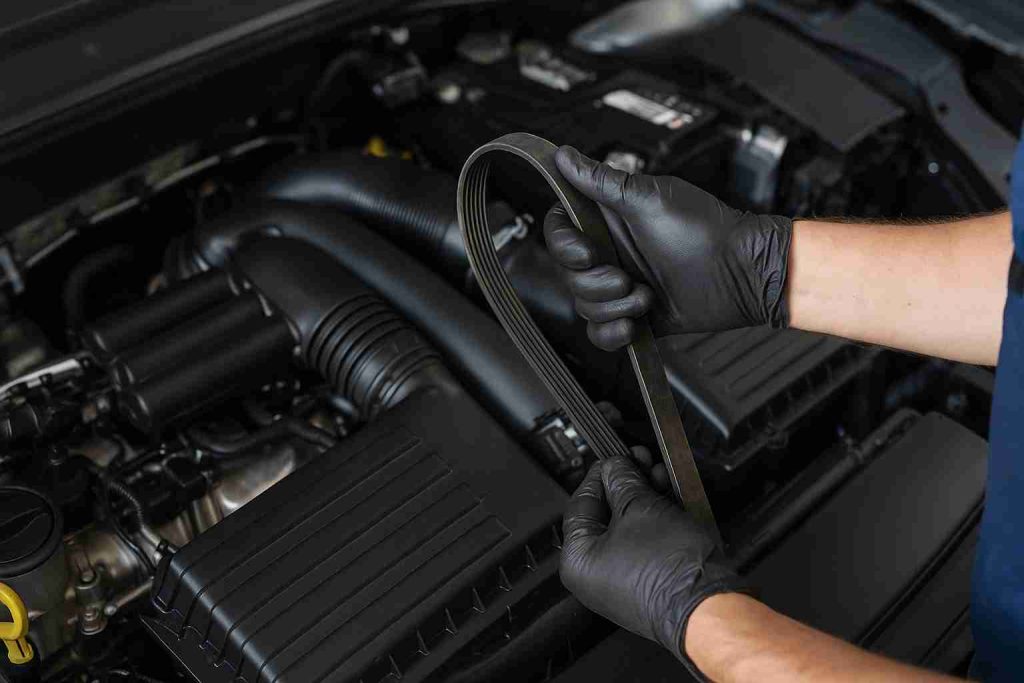
Table of Contents
What Is a Serpentine Belt?
A serpentine belt, also known as a drive belt, is a single, continuous belt that winds through a series of pulleys to keep multiple engine accessories powered. It gets its name from the snake-like way it loops around these components.
What the Serpentine Belt Powers:
- Alternator: Keeps the battery charged and powers electrical systems
- Power Steering Pump: Helps you steer your vehicle with ease
- Water Pump (in some vehicles): Cools the engine by circulating coolant
- Air Conditioning Compressor: Powers your car’s air conditioning system
- Radiator Fan (in some setups): Helps prevent overheating
Without this one belt, your vehicle would lose most of its essential functions almost immediately. That’s why recognizing its importance and inspecting it often is key.
Why Serpentine Belt Inspections Are So Important
1. Avoid Sudden Breakdowns
One of the top reasons for regularly checking your serpentine belt is to prevent a breakdown. A snapped belt will shut down your alternator, disable your power steering, kill your air conditioning, and may even stop your engine from cooling. In some cases, the car could overheat or stall entirely in the middle of traffic.
2. Save on Major Repairs
Replacing a broken serpentine belt costs significantly more when it fails unexpectedly. A routine inspection could help catch cracks, fraying, or glazing before the belt fails, avoiding damage to surrounding components.
For example:
- A failed serpentine belt can lead to a dead battery (if the alternator stops working)
- It can cause engine overheating (if it powers the water pump)
- It can ruin the power steering system, making the car hard to steer
- If the belt breaks while the engine is running, it may damage pulleys or accessory components
3. Improve Engine Efficiency
A healthy serpentine belt ensures that all engine accessories run smoothly with minimal friction. When a belt is worn or misaligned, it can increase strain on the engine, lower gas mileage, and lead to inefficient power delivery.
What Happens If You Ignore It?
Failing to inspect or replace a worn serpentine belt can lead to:
- Engine Overheating: The water pump may stop circulating coolant.
- Loss of Power Steering: Steering becomes extremely difficult, especially dangerous at high speeds or when parking.
- No Air Conditioning: The A/C system won’t function without the belt driving the compressor.
- Electrical Failure: If the alternator stops working, your battery will drain quickly.
- Complete Engine Shutdown: If multiple components fail at once, your vehicle may stall and leave you stranded.
All these outcomes are expensive, dangerous, and completely avoidable with regular inspections.
How Often Should You Inspect the Serpentine Belt?
Most vehicle manufacturers recommend inspecting the serpentine belt every 10,000 to 15,000 miles and replacing it around 60,000 to 100,000 miles depending on the vehicle, usage, and belt material.
However, it’s not just about mileage. You should also visually inspect the belt at least once every oil change, especially if:
- Your car is over 5 years old
- You drive in hot or dusty climates
- You frequently drive in stop-and-go traffic
- You tow or carry heavy loads
Ask your mechanic to check it or learn how to inspect it yourself—it only takes a few minutes.
How to Spot Signs of a Worn Serpentine Belt
You don’t need to be a mechanic to spot some common warning signs:
Visual Signs:
- Cracks or fraying along the belt’s edges
- Glazing or shiny patches
- Pieces of rubber missing
- Belt appears dry or brittle
- Visible wear near pulleys
Audible Signs:
- Squealing or chirping noises, especially when starting the car or turning on accessories
- Whining sounds from under the hood
- Power loss in accessories, like dim lights or weak A/C
If you notice any of these symptoms, get your belt inspected immediately.
Benefits of Early Serpentine Belt Replacement
Replacing the serpentine belt before it breaks brings multiple benefits:
1. Peace of Mind
You won’t have to worry about breaking down on the freeway or losing control of the vehicle’s steering.
2. Cost Savings
It’s cheaper to replace the belt during scheduled maintenance than deal with emergency repairs caused by a snapped belt.
3. Better Performance
Your alternator, A/C, and other accessories will perform more efficiently with a well-tensioned, smooth-running belt.
4. Fuel Efficiency
A tight, healthy belt reduces drag on the engine, helping maintain better gas mileage.
5. Avoids Chain Reaction Damage
A broken belt can damage surrounding components like pulleys or tensioners. Replacing it early prevents this domino effect.
How a Mechanic Inspects the Belt
Professional mechanics check more than just surface wear. During a routine inspection, they will:
- Look for physical damage like cracks or splits
- Check belt tension and alignment
- Inspect pulleys and tensioners for smooth rotation
- Test for belt stretch or loss of flexibility
- Use a belt wear gauge (in some shops) for precise measurement
Mechanics may also recommend replacing the tensioner if it shows signs of wear, since a weak tensioner can lead to belt slippage even if the belt is new.
Can You Inspect It Yourself?
Yes, if you’re comfortable opening your hood and can locate the belt. Here’s a simple DIY inspection checklist:
- Turn off the engine and let it cool
- Locate the serpentine belt (usually a long belt wrapped around several pulleys)
- Check for cracks, frays, or glazing
- Look at the tension—there should be very little slack
- Check the belt ribs (underside)—they shouldn’t be cracked or worn
If anything looks suspicious, schedule a professional inspection.
Replacing the Serpentine Belt
Most serpentine belts cost between $25 and $75, and labor adds another $75 to $150 depending on vehicle model. It’s a relatively low-cost job with high-value results.
Always choose high-quality replacement belts and consider replacing the tensioner or pulleys at the same time if they’re worn.
Final Thoughts: Don’t Skip This Small Step That Protects Your Whole Vehicle
Regular serpentine belt inspections are one of the simplest and most cost-effective ways to protect your engine, keep you safe, and avoid big repair bills. This small rubber belt does a big job—and when it fails, the results can be disastrous. Whether you’re a DIY car owner or someone who relies on a trusted mechanic, make sure that serpentine belt checks are part of your regular routine maintenance.
It’s a quick inspection that can save you thousands—and possibly your safety on the road. Make it a habit and stay ahead of costly, unexpected repairs.
FAQs
How often should I check my serpentine belt?
Inspect it every oil change or 10,000–15,000 miles to catch early wear, prevent sudden breakdowns, and keep your car running safely.
What causes a serpentine belt to squeal?
A squealing belt is usually loose, cracked, or worn. Replace it early to avoid damage to key systems like the alternator or power steering.
What are signs my serpentine belt is going bad?
Cracks, frayed edges, and shiny spots mean the belt is wearing out. Replacing it early helps avoid engine trouble and loss of power.
Can a broken serpentine belt overheat my engine?
Yes. If your belt drives the water pump, a break can stop coolant flow and cause the engine to overheat fast, possibly causing major damage.
Why did my power steering suddenly get stiff?
If the belt breaks, the power steering pump stops working. This makes steering hard and unsafe, especially at low speeds or while parking.
Will a bad serpentine belt cause battery lights?
Yes. If the belt slips or breaks, it can stop the alternator from charging, which triggers the battery light and can leave you stranded.
Do I need a tool to inspect my serpentine belt?
No tools needed—just check for cracks or wear during oil changes. A mechanic may use a gauge, but simple visual checks catch most issues.
Can I still drive if the serpentine belt breaks?
Driving without the belt is risky. You’ll lose battery power, cooling, and steering. Stop right away and replace it to avoid engine damage.


