
Driving through Dallas’s congested highways, from I-35E to LBJ Freeway, puts your vehicle to the test every day. And while most drivers focus on oil changes and tire checks, few give their alternator the attention it needs—until it fails. This small but vital component powers your car’s electrical system and helps keep your battery charged. In this guide, you’ll learn how to spot early warning signs, avoid damage, and maintain your alternator for the long haul—especially in Dallas’s demanding driving environment. With the right knowledge and habits, you can reduce costly repairs, avoid highway breakdowns, and keep your vehicle running smoothly for years.
Table of Contents
Why the Alternator Matters in Dallas Driving Conditions
Dallas drivers face some of the heaviest traffic in Texas. With daily commutes stretching across the Dallas North Tollway, I-30, and US-75, vehicles spend long hours idling, stopping, and restarting. That puts a big demand on your alternator. It powers your car’s electrical systems—including the radio, air conditioning, lights, and power windows—while also recharging the battery.
Without a working alternator, your battery dies fast, and eventually, your car won’t even start. That’s why learning how to keep this part healthy isn’t just about saving money—it’s about keeping your car dependable on every trip through the Metroplex.
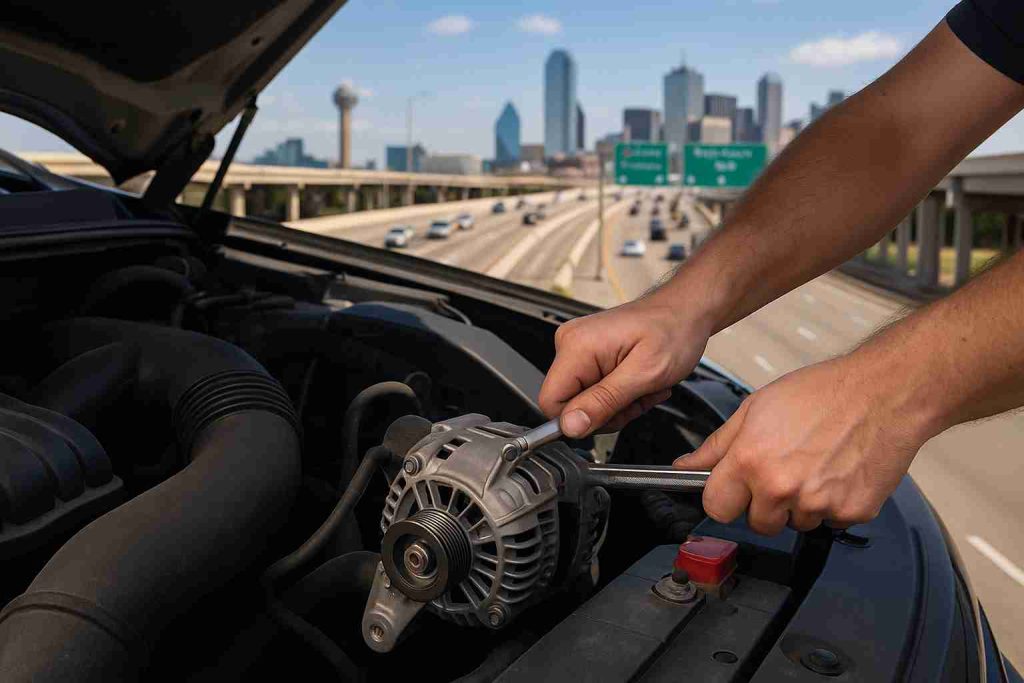
How Dallas Traffic Wears Down Your Alternator
Dallas highways are often packed during morning and evening rush hours. If you spend a lot of time creeping through traffic on I-635 or waiting at lights along Belt Line Road, your alternator works overtime. Here’s how the local traffic affects it:
Frequent Idling: When you sit in traffic, your engine runs slower, which reduces the alternator’s output.
Constant Accessories: Using the AC in summer, headlights at night, and your phone charger during commutes draws more power.
Stop-and-Go Stress: Accelerating and braking often puts more strain on your engine and, by extension, the alternator.
In short, Dallas’s roadways create a perfect storm for early alternator wear if you don’t take care of it.

Top Signs Your Alternator Might Be Failing
Catching alternator problems early can save you from being stranded on the side of I-20 or stuck in a parking garage downtown. Look for these warning signs:
Dim or Flickering Headlights: If your lights change brightness when you speed up or slow down, your alternator might not be keeping up.
Dashboard Warning Light: A battery-shaped light or “ALT” warning could mean your alternator isn’t charging correctly.
Dead Battery (Again): A battery that dies often—especially after you just replaced it—is likely not being recharged by the alternator.
Electrical Glitches: Power windows or the stereo cutting in and out signal low voltage.
Unusual Sounds: A grinding or whining noise near the engine could mean worn bearings in the alternator.
Don’t ignore these. Even if your car still starts, a failing alternator can lead to complete engine shutoff—dangerous and inconvenient, especially in highway traffic.
Simple Maintenance Tips to Extend Alternator Life
You don’t need to be a mechanic to keep your alternator in good shape. Here’s how Dallas drivers can extend its life:
Check the Belt: Your alternator is powered by a serpentine belt. If it’s loose, cracked, or slipping, get it tightened or replaced.
Inspect for Dirt and Oil: The alternator needs to stay clean. Leaking fluids from other parts can damage it.
Avoid Overloading: Don’t plug in too many chargers or add high-powered sound systems without upgrades.
Start Smoothly: Avoid revving your engine during startup. This sudden power demand can wear down parts fast.
Schedule Electrical Checks: Ask your mechanic to test your charging system during routine service.
A little attention goes a long way. These simple habits can save you hundreds in repairs and hours of downtime.
How Extreme Texas Weather Impacts Alternator Health
Dallas weather isn’t easy on cars. With summer highs soaring past 100°F and sudden cold snaps in winter, temperature swings can wear down vehicle components faster. Here’s how it affects your alternator:
Heat Stress: High temperatures make your engine and alternator work harder, potentially shortening lifespan.
Cold Mornings: On chilly mornings, batteries need more power to start, forcing the alternator to work overtime.
Storms and Humidity: Moisture can corrode electrical parts and reduce alternator efficiency.
To counter this, park in the shade or use a garage whenever possible. In winter, give your car a few extra seconds to warm up before turning on major electrical features.
Battery and Alternator: A Vital Partnership
Your car’s alternator and battery are like teammates. If one fails, the other suffers. Many alternator problems are mistaken for battery issues and vice versa.
A Bad Battery Hurts the Alternator: If your battery holds less charge, the alternator has to work longer to top it off.
An Alternator That Can’t Keep Up: Even a new battery will die quickly if the alternator can’t recharge it properly.
If you’re replacing one, it’s smart to test the other. A simple check can prevent future breakdowns and keep your vehicle reliable on Dallas streets.
Common Driving Habits That Shorten Alternator Lifespan
Some everyday habits might be doing quiet damage to your alternator without you realizing it:
Short Trips Only: Driving short distances doesn’t give the alternator enough time to recharge the battery.
Leaving Accessories On: Forgetting to turn off lights or dash cams when parked drains your battery—and your alternator has to refill that charge.
Rough Roads: Bumpy streets like those near industrial zones can loosen belts or damage mounting brackets.
Being aware of these can help you drive smarter. Even changing a few habits can significantly improve how long your alternator lasts.
Local Driving Conditions and Their Effects on Electrical Systems
Dallas’s mix of highways, suburban routes, and urban stoplights means your car goes through constant power usage cycles. Add in traffic jams on Woodall Rodgers Freeway or long drives across the DFW area, and your alternator has its work cut out for it.
Urban Driving: Frequent starts and stops mean the alternator never gets a steady rhythm.
High-Speed Highway Driving: At higher speeds, the alternator performs well—but it also faces more heat and load.
Suburban Errands: Short, quick trips drain your battery without giving time for recharge.
Understanding this helps you time your maintenance better and avoid surprises.
How to Protect Your Alternator During Stop-and-Go Traffic
Stop-and-go traffic is a way of life in Dallas, especially near downtown or during construction. Here’s how to protect your alternator during those slow grinds:
Turn Off Extras: If stuck for more than a minute, turn off AC or radio to ease the load.
Don’t Ride the Brakes: Let your car coast when safe; it reduces engine strain.
Keep Battery Healthy: A strong battery makes the alternator’s job easier during repeated starts.
Planning routes to avoid the worst traffic can also help. Apps like Waze or Google Maps are great for spotting bottlenecks ahead of time.
When It’s Time to Replace Your Alternator
Even with perfect care, alternators don’t last forever. Most last between 80,000–150,000 miles. Signs that it’s time for a replacement:
Multiple Electric Failures: If lights, stereo, and AC fail one after another, the alternator likely isn’t producing enough power.
Repeated Battery Replacements: If you’ve replaced batteries but still see issues, the root cause could be the alternator.
Smoke or Burning Smell: This is urgent. If you smell burning rubber, pull over and call a mechanic.
A professional mechanic can test your alternator quickly. Catching the problem early keeps you safe on busy Dallas roads.
FAQs: Common Questions
What are signs of alternator failure in Dallas traffic?
Look for dim lights, warning lights, weird sounds, or a dead battery. These signs show your alternator may be going bad, especially in Dallas traffic.
How can I make my alternator last longer in Dallas?
Keep the belt tight, check for leaks, use less power stuff, and make sure your battery is good to help your alternator last longer in Dallas.
Why does my alternator fail during Dallas summers?
Hot Dallas summers make your alternator work harder and wear out faster, especially with AC and other electric parts running often.
Is frequent idling in Dallas traffic bad for my alternator?
Yes, idling makes the alternator spin slower but still power things. It can wear it out faster, especially in Dallas stop-and-go traffic.
How often should I check my alternator in Dallas?
Check it once a year or during big services. Dallas roads and heat can wear parts down fast, so it’s smart to keep an eye on it.
Can a weak battery affect my alternator’s performance?
Yes. A weak battery makes the alternator work too hard. That can shorten its life and cause more car trouble in the long run.
What maintenance tips help my alternator in Dallas traffic?
Use less power while idling, keep the belt in good shape, and check your battery often. These steps help your alternator last longer in traffic.
Final Thoughts: Drive Smarter, Not Harder
Your alternator is one of the unsung heroes of your vehicle. Especially in a high-demand city like Dallas, it quietly powers the systems you rely on every time you drive. With a little knowledge and some smart habits, you can help your alternator last longer, reduce repair bills, and stay confidently on the move—whether you’re headed down I-20 or cruising around Lakewood.
By being proactive, you’ll not only avoid being stranded, but you’ll also keep your car healthier and your daily routine smoother. Don’t wait until your dashboard lights up—take care of your alternator now, and it’ll take care of you.


